
Automotive
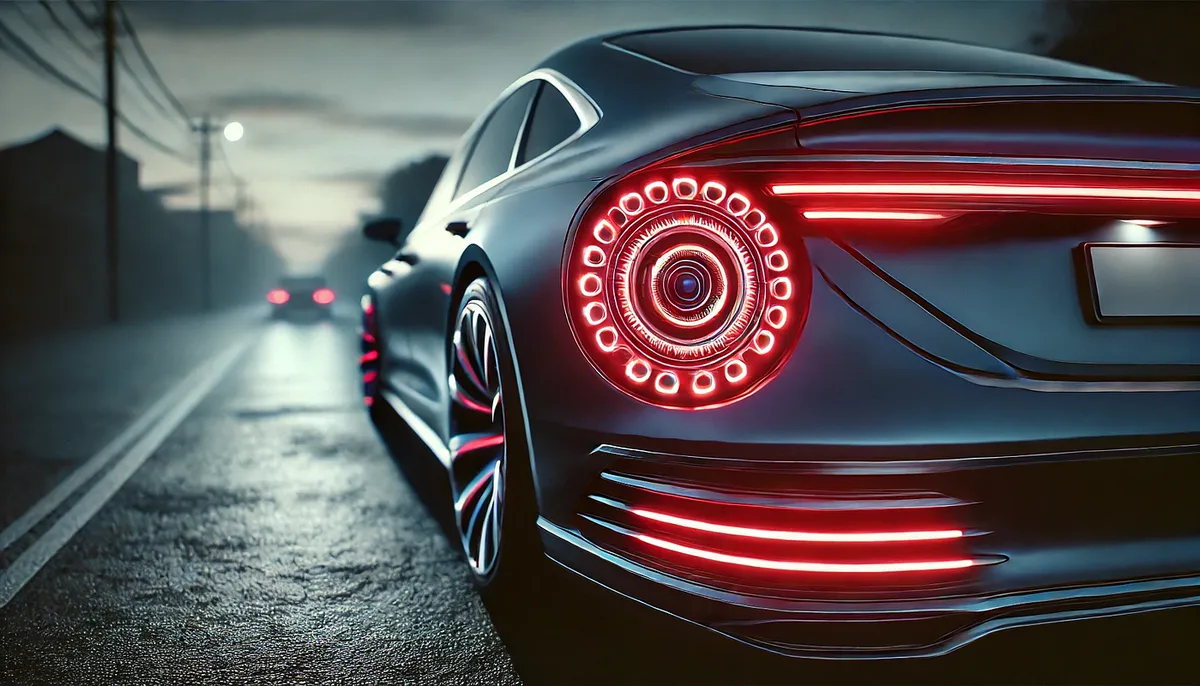
Innovating Vehicle Brake Lights: Adaptive Intensity and Concentric Ring Patterns for Safer Roads
October 31, 2024
Originally published on Medium.
Modern vehicles are packed with technology, but brake lights have seen minimal innovation over the years. To improve road safety, we’re introducing an enhanced brake light system that adapts to how hard a vehicle is slowing down. This system could make a real difference in helping drivers anticipate sudden stops, reducing the risk of rear-end collisions.
The Concept: Smarter Brake Lights
This advanced brake light system dynamically adjusts brightness and displays a pattern based on the vehicle’s deceleration. An accelerometer and a dedicated automotive-grade microcontroller (MCU) automatically change the intensity and number of rings that light up based on how quickly the vehicle is slowing down.
For instance:
- Gradual slowing: The central light ring glows with a low-intensity light.
- Moderate braking: The central and first outer rings light up, signaling that the driver is slowing more forcefully.
- Sudden stops: All rings shine brightly, immediately alerting the driver behind to brake.
How It Works
1. Key Components
- Automotive MCU: The brain of the system, processing acceleration data and making rapid adjustments to brake light intensity and patterns.
- Accelerometer: This sensor tracks deceleration, providing data to the MCU to determine if the car is slowing gently or abruptly.
- LED Brake Light with Concentric Rings: LEDs provide flexibility for intensity control and patterning with minimal power draw, while concentric rings make visual signals clearer.
2. Adaptive Intensity and Pattern Control
- The accelerometer constantly reads the vehicle’s rate of deceleration.
- The MCU interprets this data in real-time, adjusting the brake light’s brightness and activating more rings as deceleration increases.
- This dynamic display gives the driver behind a more intuitive sense of the car’s behavior without relying solely on reaction time.
3. Why It Matters
- Enhanced Safety: Brake lights communicate much more information, giving trailing drivers a better sense of how urgently they need to slow down.
- Reduced Reaction Time: Visual cues from light intensity and ring patterns help drivers understand the situation faster.
- Energy Efficiency: LEDs are durable and energy-saving, making this system sustainable and cost-effective.
Operating Steps
- Detect Deceleration: As the driver brakes, the accelerometer picks up the negative acceleration and sends this data to the MCU.
- Process Data: The MCU maps the deceleration rate to predetermined light patterns, increasing brightness and expanding the pattern as the braking force rises.
- Display Adjustments:
- Low Deceleration: Only the inner ring lights up at a base brightness.
- Moderate Deceleration: The inner and first outer rings activate with increased brightness.
- High Deceleration: All rings glow at maximum brightness, signaling an urgent stop.
Future Potential
While this system enhances driver awareness, there’s potential for further upgrades:
- Advanced Driver Assistance Integration (ADAS): Syncing with ADAS features to add automatic emergency braking.
- Emergency Mode: Flashing the outermost ring in extreme cases to act as an emergency signal.
- Autonomous Communication: Future vehicles could use this visual information to communicate with autonomous systems in other vehicles, creating a network of interlinked braking notifications.
Conclusion
This system offers a safer, smarter solution to road safety by adjusting both the brightness and pattern of brake lights. When vehicles communicate clearly, everyone on the road benefits. By integrating this innovative technology, brake lights can move beyond simple red signals to become a powerful safety feature for the next generation of vehicles.